
Darood-e-Tanjeena — Read Online, PDF & Meaning
Darood-e-Tanjeena is a widely recited salutation upon the Prophet Muhammad ﷺ, recited by Muslims seeking Allah’s relief from hardship, protection, and blessing. Read it online below, or download the free PDF.
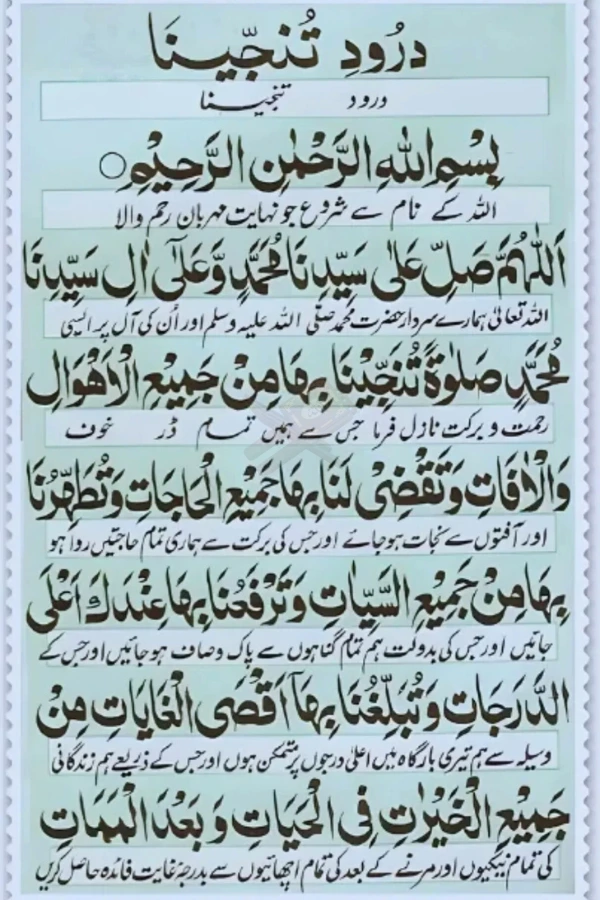
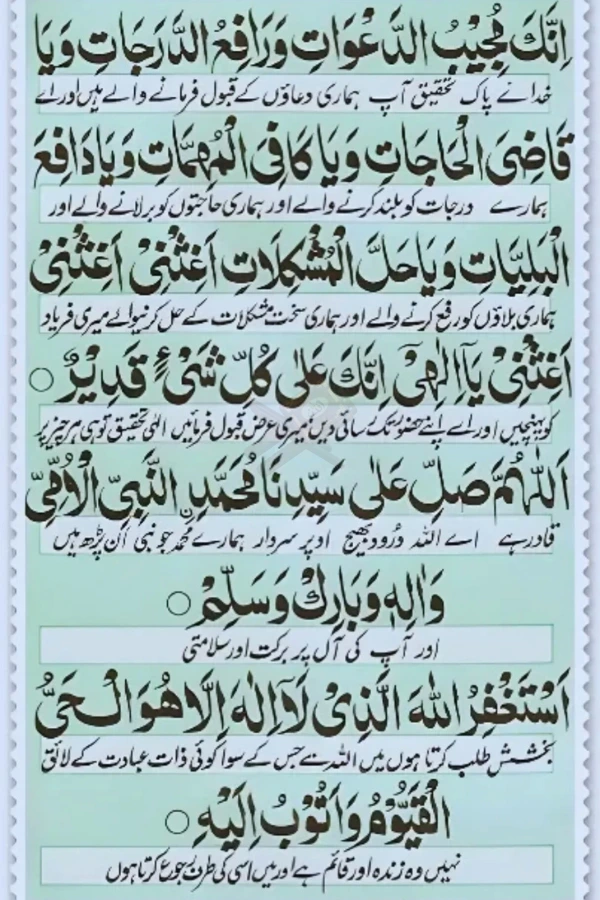
Darood e Tanjeena English Translation
“O Allah, bestow blessings upon Muhammad ﷺ and his family — blessings through which You relieve us of all anxieties and calamities, satisfy all our needs, cleanse us of all evils, and grant us the highest rank and status in Your presence — and lead us to the utmost extent of what is best for us in this world and the Hereafter, for You have power over all things.”
Wazifa for Darood-e-Tanjeena
To purify both your body and spirit, follow this Wazifa:
- Find a peaceful and calm place to perform the Wazifa.
- Start by reciting Tasmia (Bismillahir Rahmanir Raheem).
- Recite Darood-e-Ibrahimi 11 times.
- Then, with full attention and dedication, recite Darood-e-Tanjeena 313 times.
- Once done, read Darood-e-Ibrahimi 11 times again to complete the Wazifa.
- Finally, raise your hands and make a Dua to Allah SWT to fulfill your needs.
What Does “Tanjeena” Mean?
“Tanjeena” comes from the Arabic root meaning “to save” or “to deliver” — reflected in the prayer’s core request: relief and deliverance from hardship, difficulty, and worry.
The Origin Story of Darood-e-Tanjeena
According to popular tradition, this darood traces back to an account of a scholar and companions who faced grave danger — commonly told as a storm at sea — and were said to have been saved after reciting it. This story circulates widely in devotional literature, but it isn’t traced to a verified historical or hadith chain — it’s best understood as a popular tradition explaining the darood’s association with relief from danger, not a documented historical event.
How Darood-e-Tanjeena Is Traditionally Recited
A commonly practiced devotional method (a wazifa) associated with this darood:
- Find a quiet, calm space.
- Begin with Tasmia (Bismillahir Rahmanir Raheem).
- Recite Darood-e-Ibrahimi 11 times.
- Recite Darood-e-Tanjeena, commonly 313 times, with focus and sincerity.
- Close with Darood-e-Ibrahimi 11 times again.
- Raise your hands and make sincere dua for your needs.
This specific structure and repetition count is a devotional custom passed down through practice, not a fixed count mandated in an authenticated hadith — reciting fewer times, or without the surrounding Ibrahimi repetitions, doesn’t reduce the value of the prayer itself. Sincerity and consistency matter more than hitting an exact number.
Benefits of Reciting Darood-e-Tanjeena
- A source of spiritual comfort — many who recite it regularly describe a sense of calm during difficult periods, consistent with the broader established value of dhikr and salutations upon the Prophet ﷺ.
- An act of honoring the Prophet ﷺ — reciting salutations (durood) upon him is a well-established, encouraged practice in its own right, independent of this specific version’s additional claims.
- A structured habit during hardship — having a set prayer to turn to during stress gives many people something concrete to hold onto.
Specific claims about guaranteed protection from danger or guaranteed fulfillment of needs go beyond what’s independently documented — recite it as a sincere prayer and act of devotion, not as a formula with a guaranteed result.
Frequently Asked Questions
What is Darood-e-Tanjeena?
A salutation upon the Prophet Muhammad ﷺ, widely recited to seek Allah’s relief from hardship and difficulty.
How many times should I recite Darood-e-Tanjeena?
There’s no fixed obligatory count. It’s commonly recited 11, 100, or 313 times as part of a devotional wazifa, but the specific number is custom rather than a requirement.
Can anyone recite Darood-e-Tanjeena?
Yes — it’s open to any Muslim, regardless of age or background.
What is the story behind Darood-e-Tanjeena?
A popular tradition associates it with a scholar and companions saved from danger at sea after reciting it. This is devotional tradition, not a verified historical account.
Is there a specific way to recite it for benefit?
Reciting with sincerity and reflecting on its meaning is what’s emphasized — the 313-times wazifa method is a widely practiced custom, not a requirement.