
Surah Yaseen (يس): Read Online, Download PDF & Listen to Audio
Surah Yaseen is the 36th chapter of the Quran — 83 verses across 5 rukus, revealed in Makkah, and one of the most recited chapters in Muslim life. On this page you can read the full Arabic text online, download the free PDF, and listen to audio recitation without leaving the page — plus a clear explanation of the surah’s meaning, themes, and which of its popular benefits are actually authenticated.

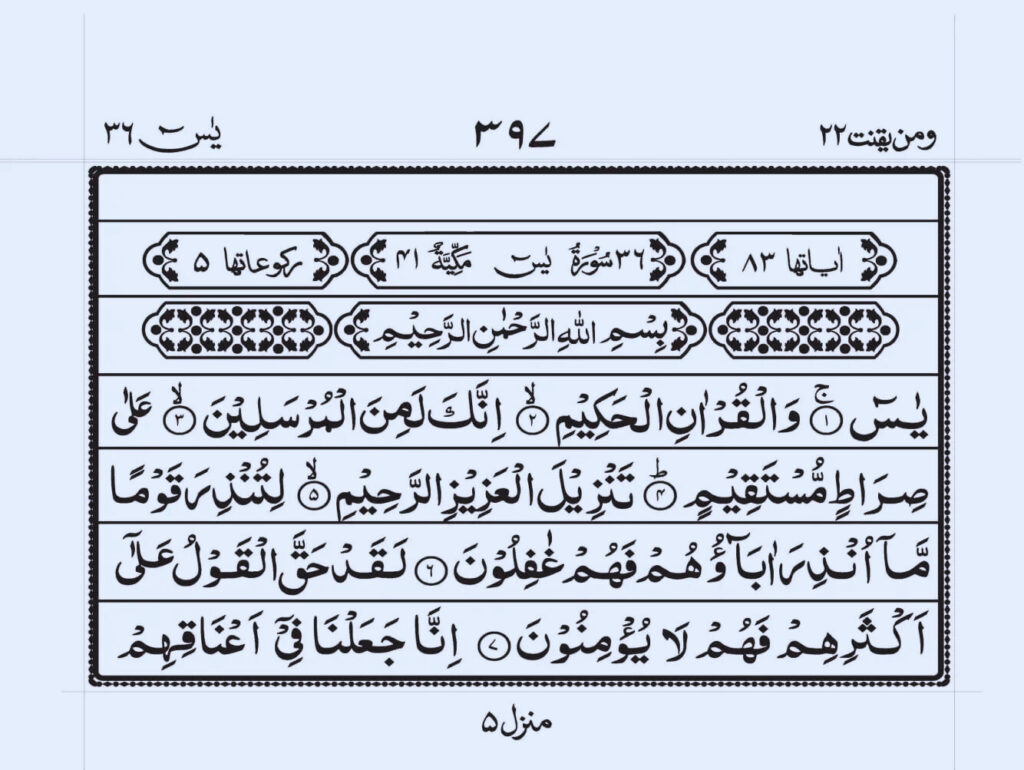
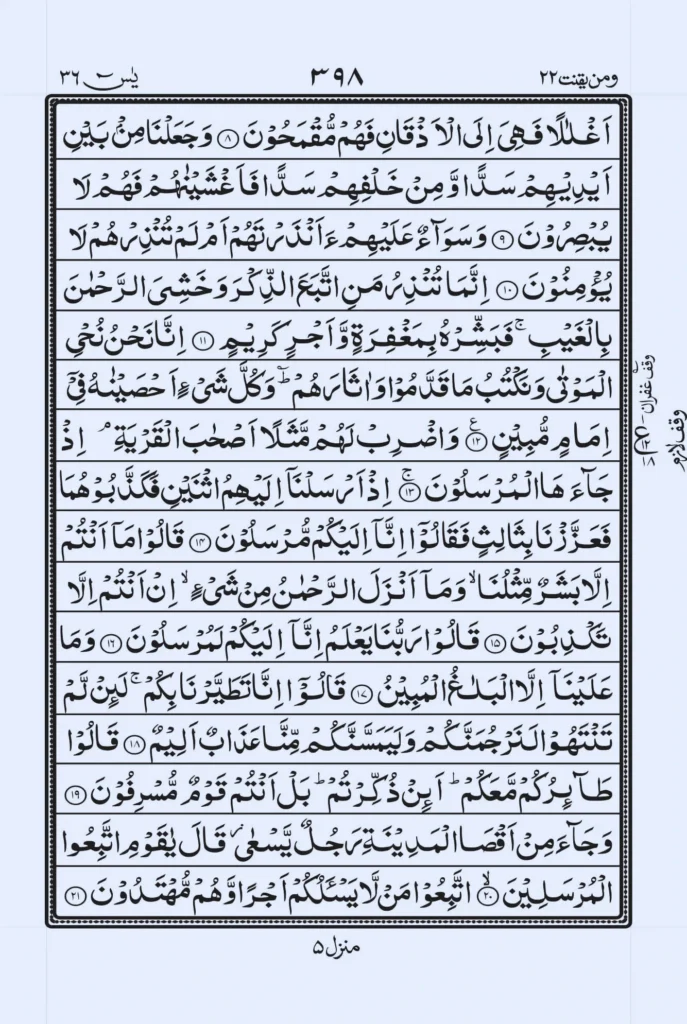
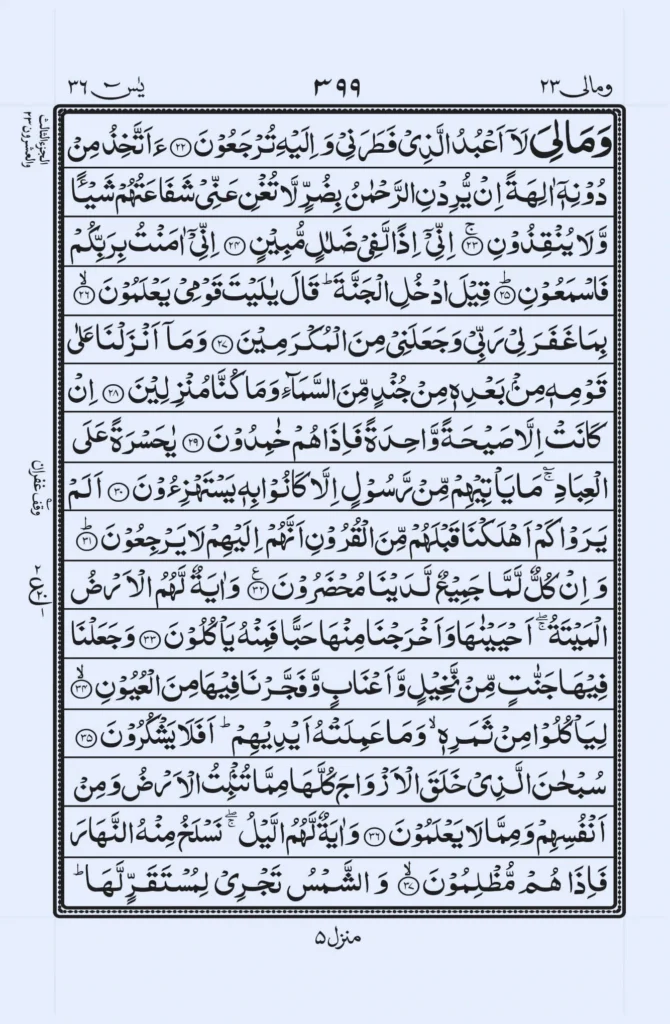
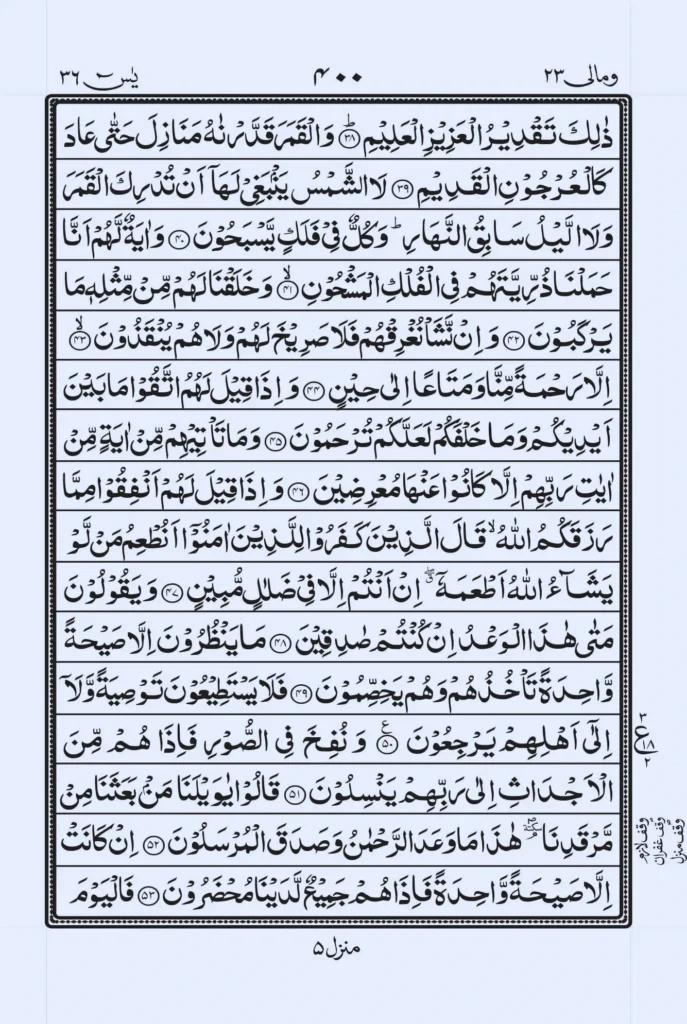
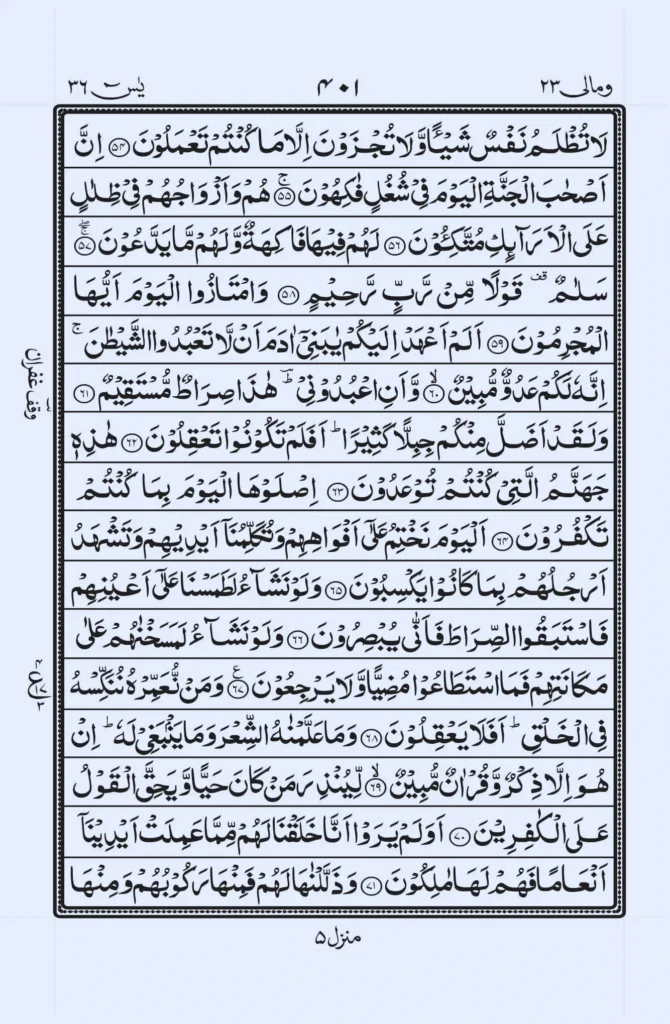
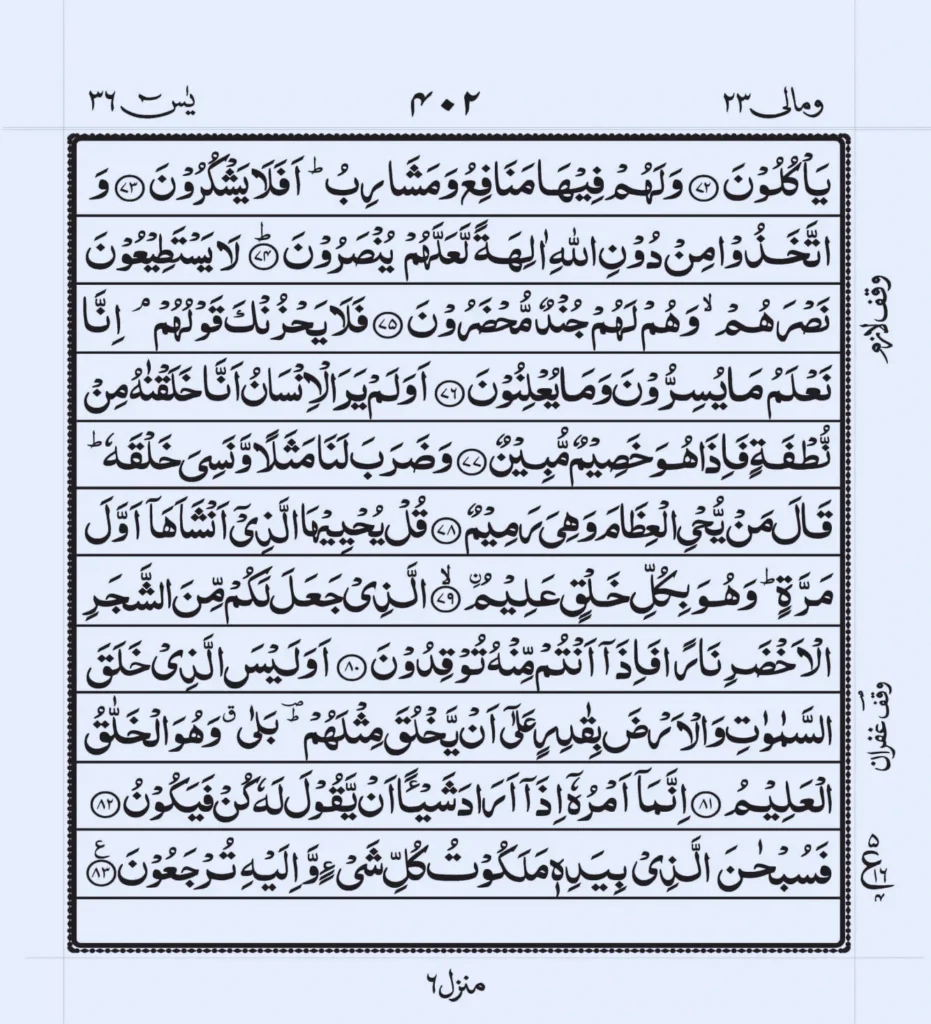
Surah Yaseen Quick Facts: Ayat, Para, Ruku & Meaning
| Detail | Value |
|---|---|
| Surah number | 36 |
| Arabic name | سورة يس (Ya-Sin) |
| Verses (ayat) | 83 |
| Rukus | 5 |
| Juz’ / Para | 22–23 |
| Revelation period | Makki (Meccan) — some scholars note verse 12 may be Madani |
| Core subject | Tawheed, prophethood, and resurrection |
| Popular title | “Heart of the Quran” |
Read Surah Yaseen Online — Arabic Text, Translation & Transliteration
Opening verses (1–3):
يس وَالْقُرْآنِ الْحَكِيمِ إِنَّكَ لَمِنَ الْمُرْسَلِينَ
Translation: Ya-Sin. By the wise Qur’an, indeed you [O Muhammad] are one of the messengers, on a straight path.
If you want the transliteration on its own — larger text, easier to follow line by line while reciting — see the dedicated Surah Yaseen Transliteration page. For a translation-only English reading, visit Surah Yaseen English. Learning correct pronunciation and articulation points (makhraj)? The Surah Yaseen Tajweed page marks the rules directly on the Arabic text.
Read Surah Yaseen in Your Language
- Surah Yaseen in Urdu
- Surah Yaseen in Hindi
- Surah Yaseen in Bengali
- Surah Yaseen in Gujarati
- Surah Yaseen in Malayalam
- Surah Yaseen in Telugu
- Surah Yaseen in Kannada
Download Surah Yaseen PDF for Free
The PDF matches the online reader above exactly, so you can move between reading on-site and offline without any inconsistency in text or translation.
Listen to Surah Yaseen Audio Recitation
For a fuller library of reciters, reciting styles, and downloadable Mp3 files, visit the dedicated Surah Yaseen Audio page.
What Does “Ya-Sin” Mean?
“Ya-Sin” belongs to a set of Quranic openings called the muqatta’at — disjoined Arabic letters that begin 29 surahs, including Alif-Lam-Meem and Ha-Meem. The Quran never explains these letters directly, and the mainstream position among classical exegetes — Ibn Kathir, Al-Qurtubi, and others — is that their precise meaning is known only to Allah.
You’ll see some pages confidently translate it as “O Human” or “O Muhammad.” These are minority interpretive opinions found in some tafsir literature, not settled linguistic fact — worth knowing the difference before repeating either as certain. It doesn’t affect the meaning or importance of anything that follows in the surah.
Surah Yaseen Tafseer: What the Surah Actually Says
The surah builds one sustained argument across three movements:
Verses 1–12 — The Prophet’s mission affirmed. An oath on “the wise Quran” affirms that Muhammad ﷺ is a genuine messenger, sent to warn a people whose forefathers had received no earlier warner.
Verses 13–32 — The parable of the town. A town receives three messengers and rejects them, until a man rushes in from the city’s edge urging his people to believe. He is killed for it and is told to enter Paradise — after which he wishes his people could know how Allah honored him. This is the surah’s central narrative and is often cited as a model for standing up for truth even at personal cost.
Verses 33–83 — Signs, argument, and outcome. The surah moves through evidence for Allah’s power — dead land revived by rain, night cleanly separated from day, the sun and moon on fixed courses, livestock created for human benefit — before building directly toward the case for resurrection, closing with a description of Paradise and Hell.
For the full verse-by-verse commentary, including classical tafsir references, see Surah Yaseen Tafseer.
Key Themes of Surah Yaseen: Tawheed, Prophethood & Resurrection
Oneness of Allah (Tawheed)
Nearly every argument in the surah — from reviving dead land to the fixed motion of the sun and moon — is used as evidence for a single, all-powerful Creator, not stated as an abstract claim on its own.
Prophethood and the True Messengers
The parable of the three messengers (13–27) shows how prophets are typically received: with rejection, until someone stands up in their defense — a pattern the Quran repeats across many earlier nations.
Resurrection and the Hereafter
The closing verses build resurrection as a logical conclusion, not a leap of faith: the One who created you from nothing can, by the same power, recreate you. Verse 82 — “His command, when He wills a thing, is only to say to it, ‘Be,’ and it is” — is often cited as the clearest single-line statement of that argument.
Faith Versus Disbelief
The surah repeatedly contrasts those who accept the messengers’ warning with those who dismiss it despite clear signs, framing the consequences described near the end.
Signs of Allah in Nature and Creation
Rain reviving barren land, ships carrying people across water, and cattle serving as food and transport are used as evidence a listener can verify from everyday experience.
Is Surah Yaseen Really the “Heart of the Quran”?
Almost every page on this topic states this as settled fact. It deserves a more careful answer.
The hadith behind the title — “everything has a heart, and the heart of the Quran is Ya-Sin” — is reported through more than one chain, including one referenced in Sunan al-Tirmidhi (2887), but is graded weak (da’if) by a number of hadith scholars. Some fatwa bodies still accept the title as suitable given the strength of the surah’s content, not the strength of the hadith’s chain.
Scholars who continue to use the title generally do so because the surah’s content genuinely concentrates the Quran’s central themes — Tawheed, prophethood, resurrection — the way a heart is central to the body.
This distinction matters, because several other popular claims about this surah — covered next — rest on similarly weak or unauthenticated narrations.
Benefits of Reciting Surah Yaseen: Verified vs. Popular Belief
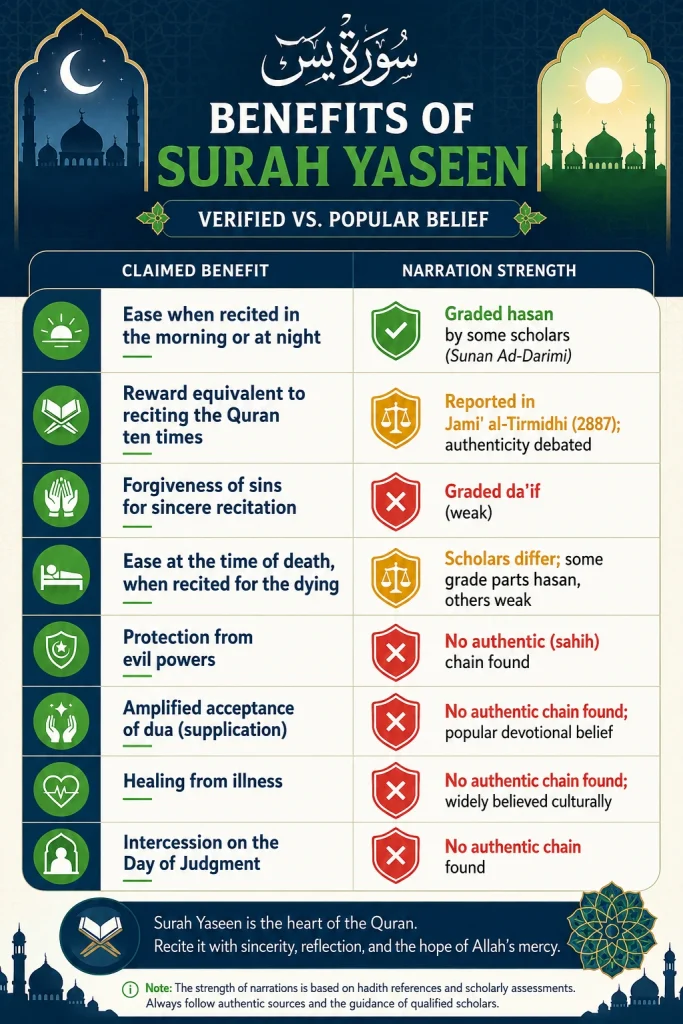
1. Ease When Recited in the Morning or Evening
Narration strength: Hasan (good), per some scholars — reported in Sunan Ad-Darimi. This is among the better-supported claims associated with the surah — recitation in the morning is reported to bring ease through the day, and in the evening, through the night. It’s one reason the surah is commonly read after Fajr.
2. Reward Equivalent to Reciting the Quran Ten Times
Narration strength: Reported in Jami’ al-Tirmidhi (2887); authenticity actively debated among hadith scholars. This is probably the most repeated claim about Surah Yaseen, and it isn’t baseless — it comes from a real, traceable hadith — but scholars are genuinely split on its chain’s reliability. Treat it as a reported virtue rather than a settled fact, and recite for the sake of worship itself rather than to “bank” a specific multiplier.
3. Forgiveness of Sins for Sincere Recitation
Narration strength: Da’if (weak). Widely repeated, but the specific hadith tying Surah Yaseen recitation to sin forgiveness doesn’t hold up well under scrutiny. Seeking forgiveness (istighfar) is, of course, always encouraged — it just isn’t this surah’s specific, authenticated function.
4. Ease at the Time of Death (Recited for the Dying)
Narration strength: Scholars differ — some grade parts of this hasan, others weak. This is the basis for the long-standing practice of reciting Surah Yaseen at the bedside of someone who is dying. The practice is old and widespread, but the underlying hadith’s grading isn’t unanimous, so it’s best understood as a comforting, worship-filled act during a difficult moment rather than a guaranteed spiritual mechanism.
5. Recitation for the Deceased (Khatm-e-Yaseen)
Narration strength: Not independently authenticated as a ritual requirement; rooted in general encouragement to recite Quran and send reward (isal-e-thawab) to the deceased. Collective recitation gatherings — often called Khatm-e-Yaseen — are a cultural and community practice, especially in South Asian Muslim communities, rather than a specific Prophetic instruction. The broader principle of reciting Quran and directing its reward to a deceased loved one is supported in Islamic scholarship generally; the specific attachment to Surah Yaseen, and to a fixed format or count, is custom built on top of that principle.
6. Protection from Evil Powers
Narration strength: No authentic (sahih) chain found. A widely held belief with no basis in an authenticated hadith. For protection, the Quran and Sunnah point instead to well-established practices like Ayat al-Kursi, the last two verses of Surah Al-Baqarah, and the morning/evening adhkar — none of which are Surah Yaseen-specific claims.
7. Amplified Acceptance of Dua (Supplication)
Narration strength: No authentic chain found. Popular belief, not an established ruling. Dua is accepted based on sincerity, timing (such as the last third of the night), and Allah’s will — reciting Surah Yaseen beforehand isn’t a documented condition for acceptance, though there’s no harm in combining recitation with sincere dua.
8. Healing from Illness
Narration strength: No authentic chain found; widely believed culturally. The Quran as a whole is described as a source of healing (Surah Al-Isra 17:82), which is a general, authentic principle — but the specific claim that Surah Yaseen cures illness isn’t independently supported. Reciting it alongside seeking appropriate medical treatment is a reasonable, spiritually grounded practice; treating it as a substitute for treatment is not advisable.
9. Intercession on the Day of Judgment
Narration strength: No authentic chain found. This specific claim — that Surah Yaseen intercedes for its reciter — doesn’t trace back to a sahih source, unlike, for example, the well-documented reports about Surah Al-Baqarah’s protective role.
None of this diminishes Surah Yaseen — reciting any part of the Quran is an act of worship that carries reward on its own terms. It means the extra claims layered on top by folklore shouldn’t be repeated as settled rulings. For a full breakdown of each reported benefit with sourcing, see Benefits of Surah Yaseen.
Best Time to Recite Surah Yaseen
None of the following are obligatory, but these are the occasions most commonly associated with Surah Yaseen in practice:
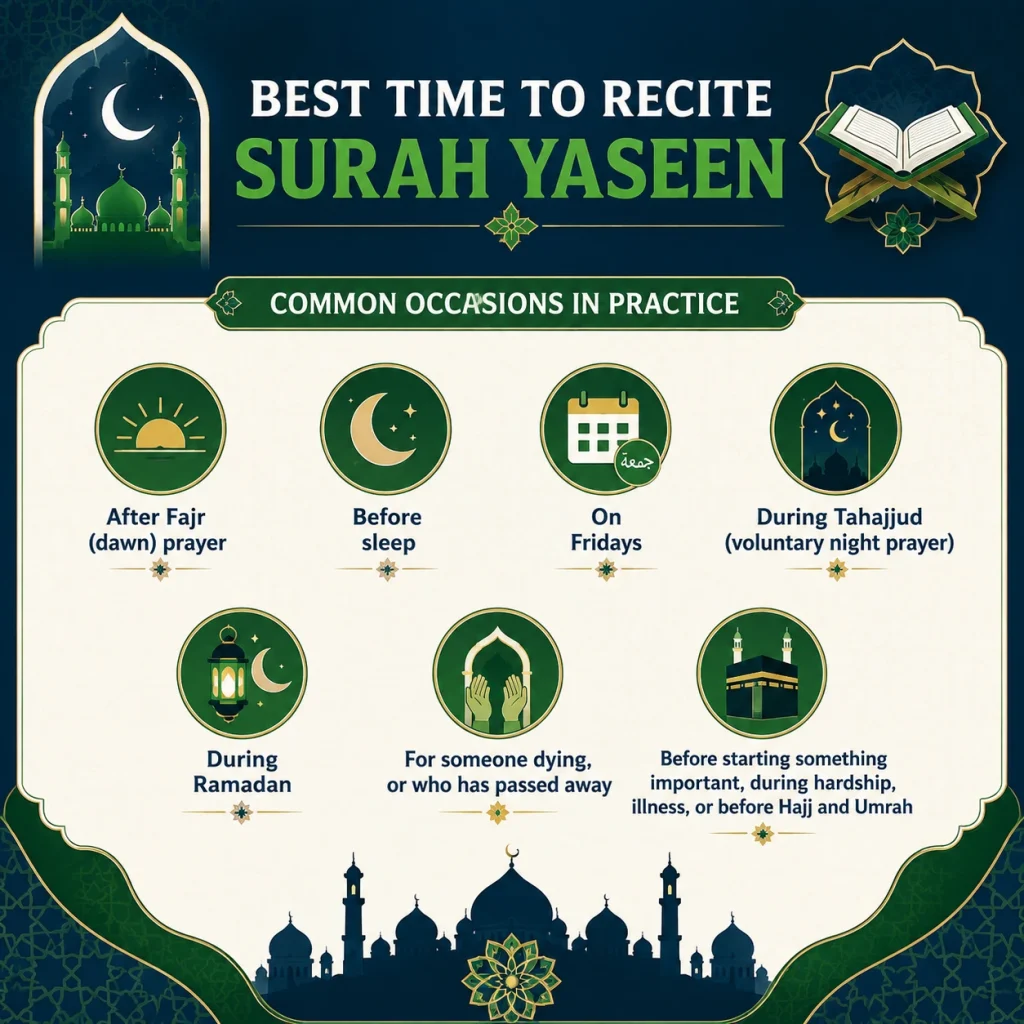
- After Fajr (dawn) prayer — tied to reports describing ease “till evening” when recited in the morning.
- Before sleep — paired with a similar report about ease “till morning.”
- On Fridays — often recited alongside Surah Al-Kahf, as part of the general encouragement to increase Quran recitation on Jumu’ah.
- During Tahajjud (voluntary night prayer) — for those who pray it, as part of longer night recitation.
- During Ramadan — as part of the broader increase in Quran recitation during the month.
- For someone dying, or who has passed away — a long-standing devotional practice tied to the “ease at death” reports discussed above.
- Before starting something important, during hardship, illness, or before Hajj and Umrah — widely practiced for comfort and reflection, though most specific-outcome claims aren’t independently authenticated.
How Many Times Should You Recite Surah Yaseen a Day?
There’s no fixed, obligatory count. In practice:
- Once daily, often after Fajr or before sleep, as a personal habit.
- Khatm-e-Yaseen Shareef — a collective devotional recitation, often for a specific intention or for someone who has passed away.
- 41 times, 7 times, or an odd number — tied to popular wish-fulfillment beliefs, particularly in South Asian tradition, but not based on a sahih hadith.
For a specific devotional wird (litany) built around Surah Yaseen, including recommended counts and occasions, see Surah Yaseen Ka Wird-e-Khas. For the dua recited after completing the surah, see Surah Yaseen Dua.
Frequently Asked Questions About Surah Yaseen
What is the meaning of Surah Yaseen?
“Ya-Sin” is a muqatta’ah — a disjoined Arabic letter pair whose precise meaning mainstream tafsir holds is known only to Allah.
What are the benefits of reciting Surah Yaseen 41 times?
A popular South Asian devotional custom tied to unauthenticated wish-fulfillment beliefs, not a sahih hadith. Harmless as a personal practice; not a guaranteed outcome.
Is Surah Yasin powerful?
It concentrates the Quran’s central arguments — Tawheed, prophethood, resurrection — into one chapter, which is why many scholars describe it as spiritually central. Claims of supernatural “power” beyond its message and reward go beyond what’s authenticated.
What problems does Surah Yasin solve?
None automatically. Reciting Quran is worship and reflection, not a mechanical fix. Popular belief associates it with ease during hardship — understood as seeking Allah’s help through sincere recitation, not a formula.
What happens if you read Surah Yaseen at night?
Some reports describe ease “till morning” for night recitation; the strength of these reports varies (see the benefits table above).
When should you recite Surah Yaseen?
Any time — there’s no restriction. Common practice favors after Fajr, on Fridays, or before sleep.
Does Surah Yasin fulfil our needs?
Recitation is worship whose reward is with Allah. Treating it as a guaranteed mechanism for a specific outcome isn’t supported by authentic hadith, but reciting with sincere intention is a normal, encouraged part of Muslim devotional life.
Can women recite Surah Yaseen during menstruation?
Scholars differ, and the ruling varies by school of thought (madhhab). Check a qualified scholar of your madhhab or a resource like IslamQA for guidance specific to your situation.
What is the biggest authentic benefit of reciting Surah Yaseen?
General reward for reciting any part of the Quran with sincerity, plus the hasan-graded report of ease when recited in the morning or evening — these rest on firmer ground than the more dramatic claims (protection, guaranteed healing, guaranteed intercession).
Is reciting Surah Yaseen for the dead an authentic practice?
It’s a long-standing, widely practiced custom rather than a specific Prophetic instruction with unanimous hadith support. The broader principle of reciting Quran and sending its reward to the deceased is more generally supported in Islamic scholarship.
Does Surah Yaseen really equal reciting the whole Quran ten times?
This is reported in Jami’ al-Tirmidhi (2887), but hadith scholars are divided on the chain’s authenticity — so it’s a reported virtue, not a settled fact.
Can Surah Yaseen cure illness?
The Quran generally is described as a healing (Surah Al-Isra 17:82), but no authentic hadith specifically ties healing to Surah Yaseen. Recite it as an act of worship alongside proper medical care, not as a substitute for it.
Is it true Surah Yaseen protects from evil powers?
This specific claim has no authentic chain. Ayat al-Kursi and the closing verses of Surah Al-Baqarah are the better-documented protective recitations.
Explore More
- Surah Yaseen Tafseer — full verse-by-verse commentary
- Benefits of Surah Yaseen — detailed, source-graded breakdown
- Surah Yaseen Transliteration
- Surah Yaseen Tajweed
- Surah Yaseen Dua
- Surah Yaseen Ka Wird-e-Khas
- Surah Yaseen Audio
- Surah Rahman PDF