
Surah Yaseen Color-Coded Tajweed — Read Online & Download PDF
If you’re learning to recite the Quran and want a visual way to avoid common pronunciation mistakes, color-coded Tajweed marks each rule directly on the Arabic text — so you can recite Surah Yaseen the way it’s meant to sound, not just sound out the letters.
Surah Yaseen Tajweed PDF
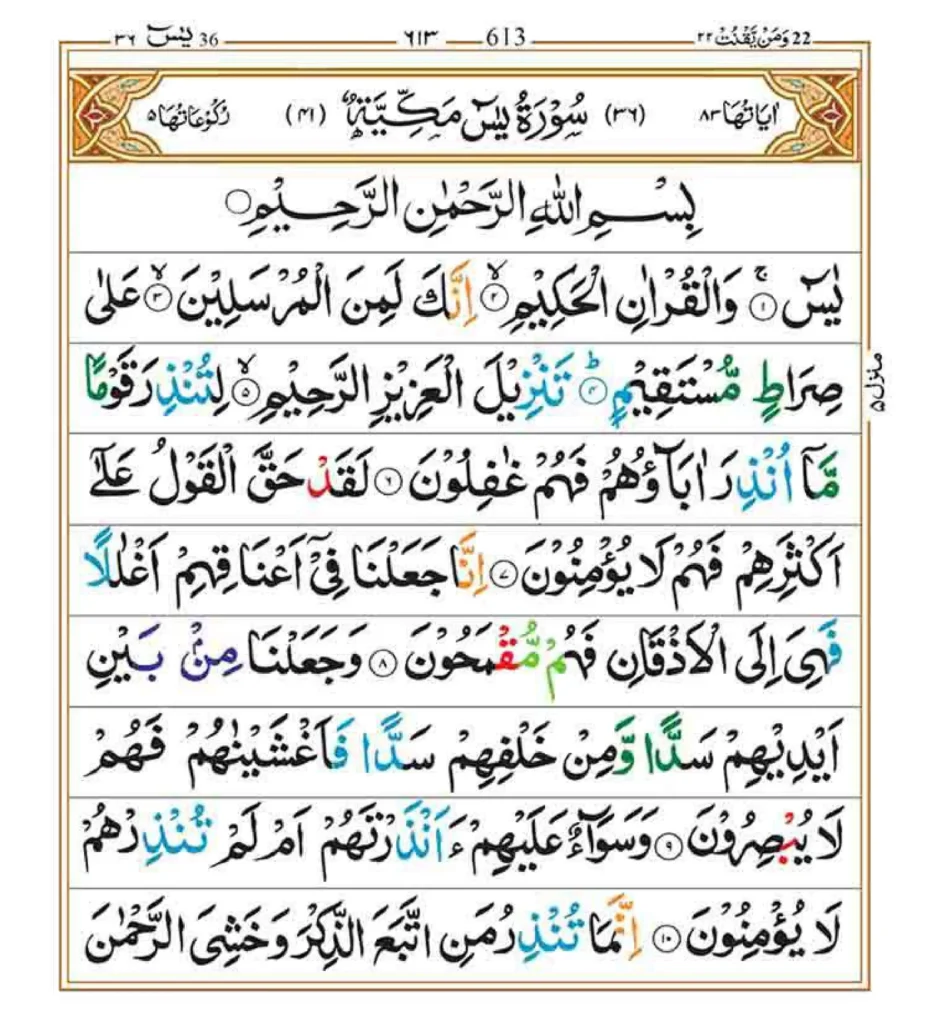
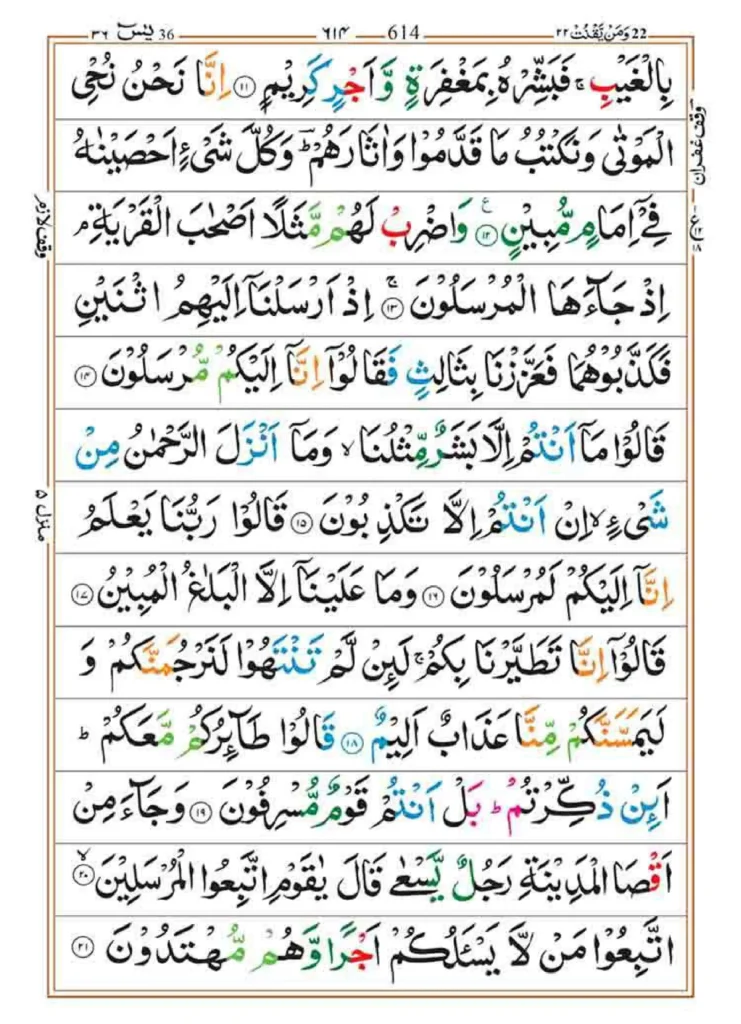
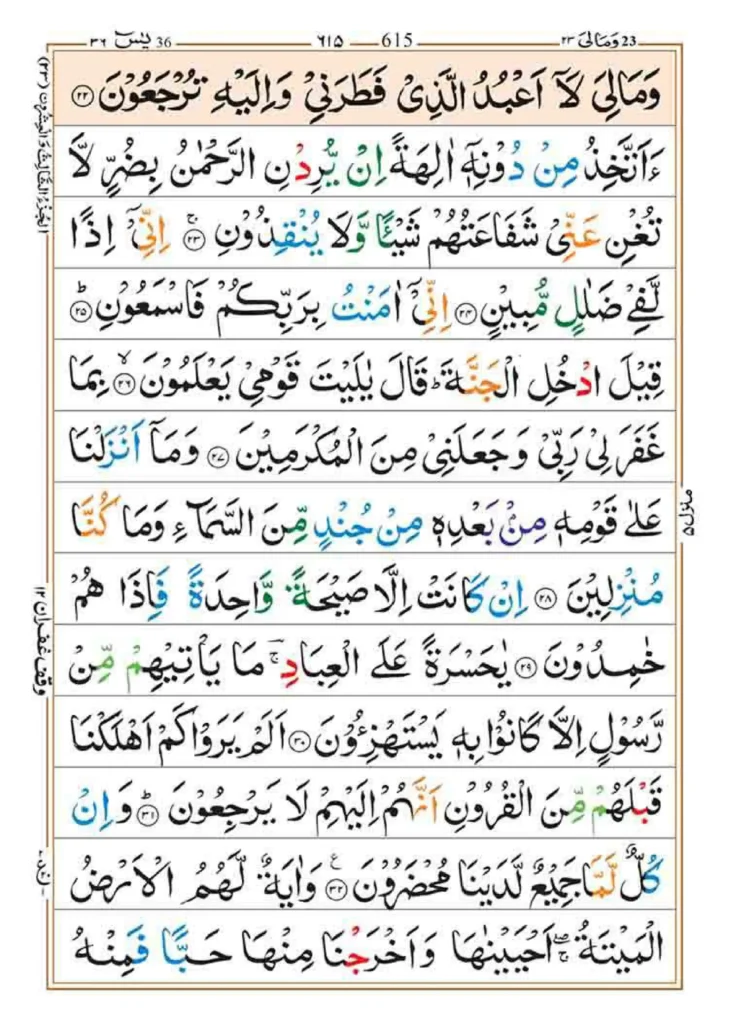
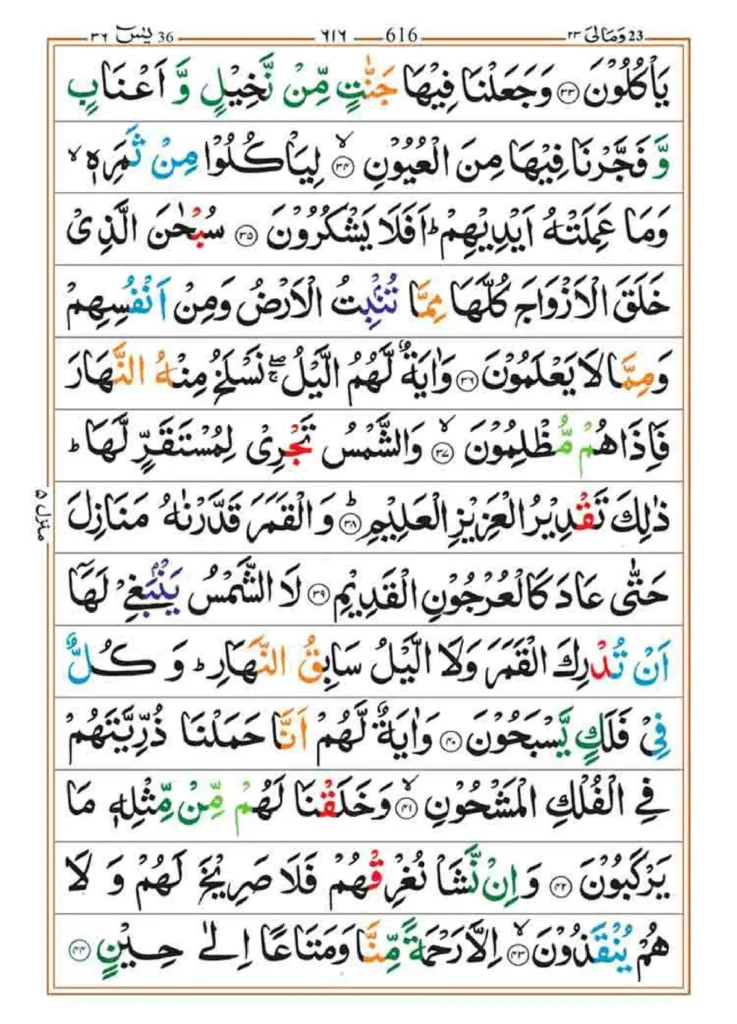
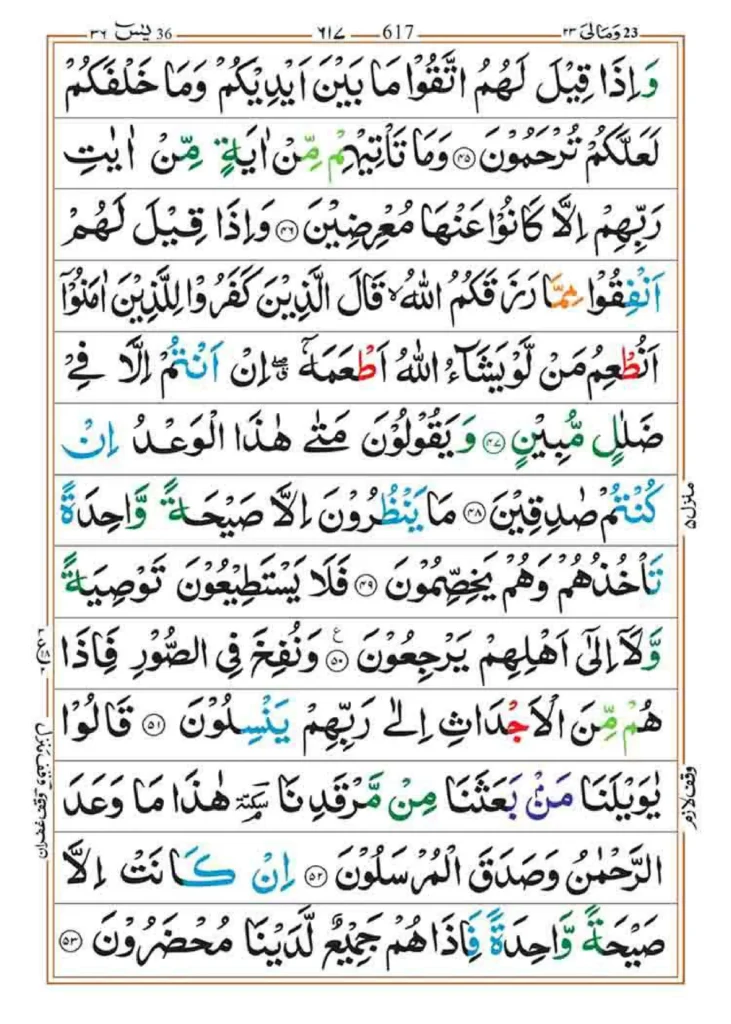
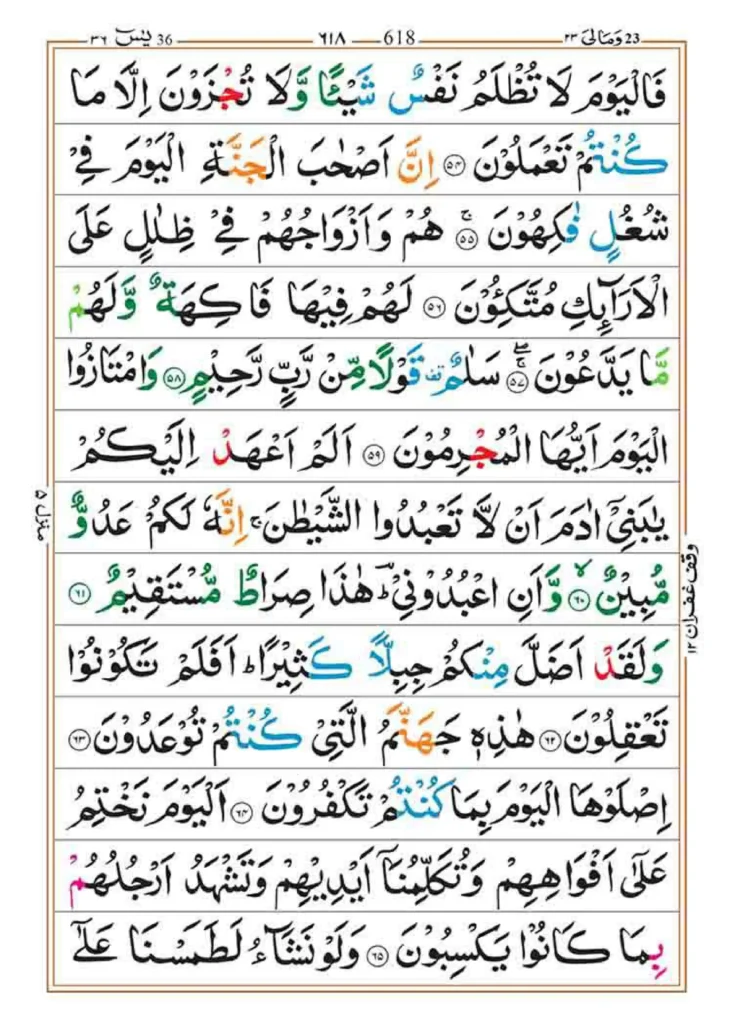
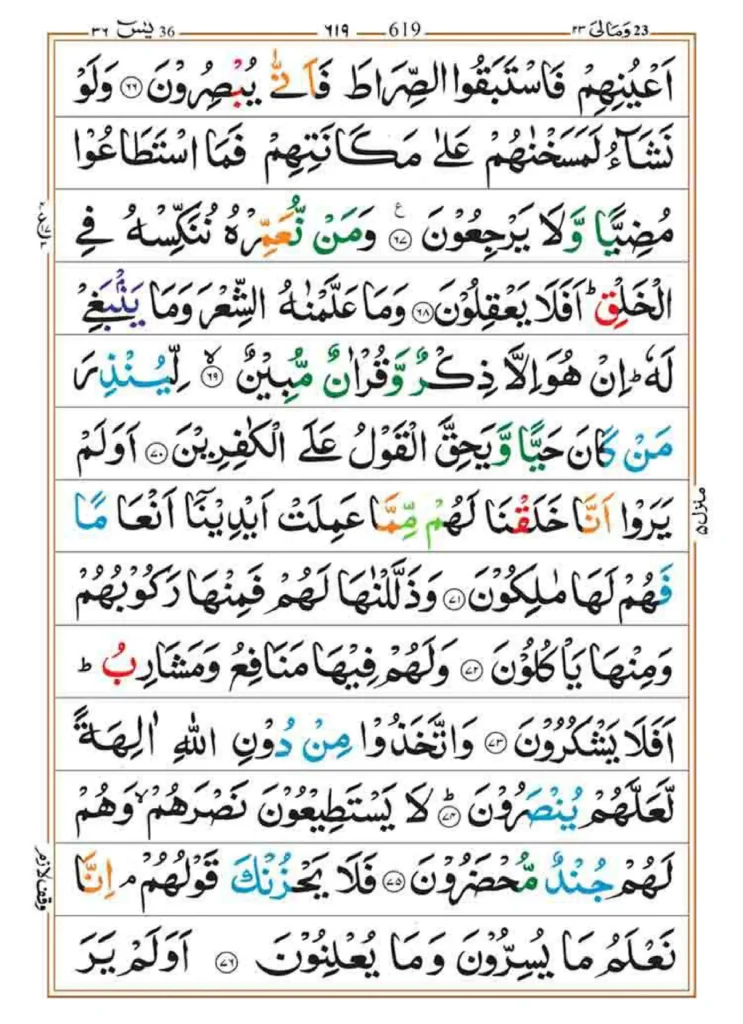
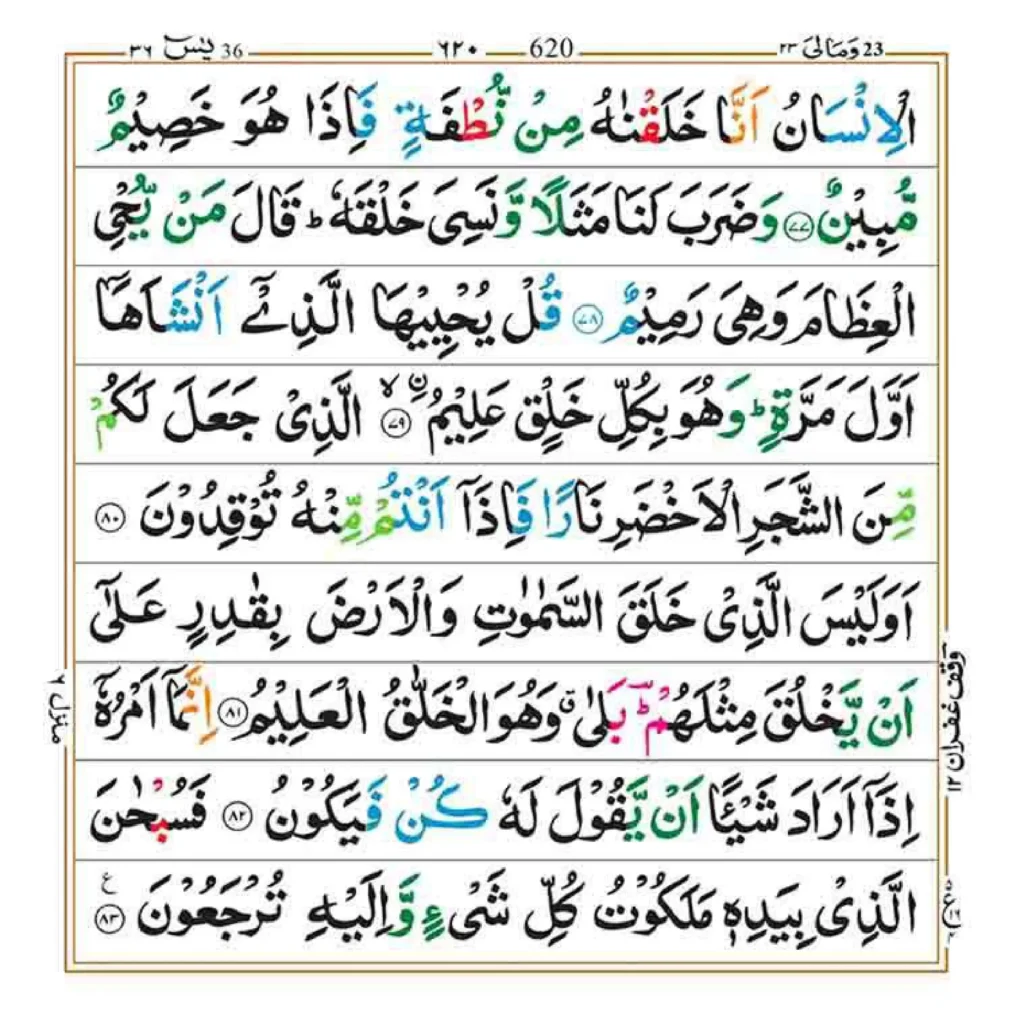
What Is Tajweed?
Tajweed refers to the rules governing correct pronunciation of Quranic Arabic — how letters are articulated, when sounds are lengthened, merged, or nasalized. Color-coding assigns a distinct color to each rule directly on the text, so you can recognize the rule visually before you’ve fully memorized it by ear.
Color-Coded Tajweed Rules Used in This PDF
| Color | Rule | What It Means |
|---|---|---|
| Blue | Ikhfa | A hidden, nasalized pronunciation of noon sakinah or tanween before certain letters — neither fully pronounced nor fully silent. |
| Orange | Ghunna | A nasal sound held for a set duration, typically on noon or meem with a shaddah. |
| Green | Ikhfa Meem Saakin | A hidden pronunciation of meem sakinah specifically before the letter ب. |
| Green | Idghaam | Merging the sound of one letter into the next rather than pronouncing them separately. |
| Red | Qalqalah | A slight echoing or bouncing sound on the letters ق ط ب ج د when they carry a sukoon. |
| Purple | Qalb | A conversion — noon sakinah or tanween before ب is pronounced as a meem sound. |
| Light green | Idghaam Meem Saakin | Meem sakinah merging into a following meem. |
For the full transliteration alongside the Arabic, see Surah Yaseen Transliteration. For the meaning behind what you’re reciting, see Surah Yaseen Tafseer.
Why Recite Surah Yaseen With Tajweed?
- Improves pronunciation — correct articulation helps preserve the intended meaning of the verses.
- Enhances the recitation experience — the rhythm and clarity that come from proper Tajweed application make recitation feel more deliberate and reflective.
- Fulfills a scholarly obligation — the majority of scholars hold that observing Tajweed’s basic rules when reciting Quran is required, not optional.
- Builds focus — applying the rules consistently as you read encourages closer attention to the text itself.
- Deepens familiarity with the Quran — learning Tajweed tends to build a more consistent recitation habit over time.
A Note on “Heart of the Quran” or Surah Yaseen Tajweed
You’ll see Surah Yaseen described elsewhere on this site, and across the web, as the “Heart of the Quran.” The hadith behind that title is graded weak (da’if) by a number of hadith scholars, even though it’s widely used to describe the surah’s importance given its content. For the full explanation, see the homepage’s breakdown of this hadith.
Getting Started with Color-Coded Tajweed
- Start with the legend above — get familiar with what each color marks before reading the full surah.
- Read slowly at first, pausing on each colored marker to apply the rule deliberately rather than skipping past it.
- Pair the visual coding with audio recitation so you’re matching what you see to what a correct recitation actually sounds like.
- Increase your pace gradually as the rules become automatic rather than something you’re consciously checking for.